

Stage 6
From Erbezzo to Sant’Anna d’Alfaedo
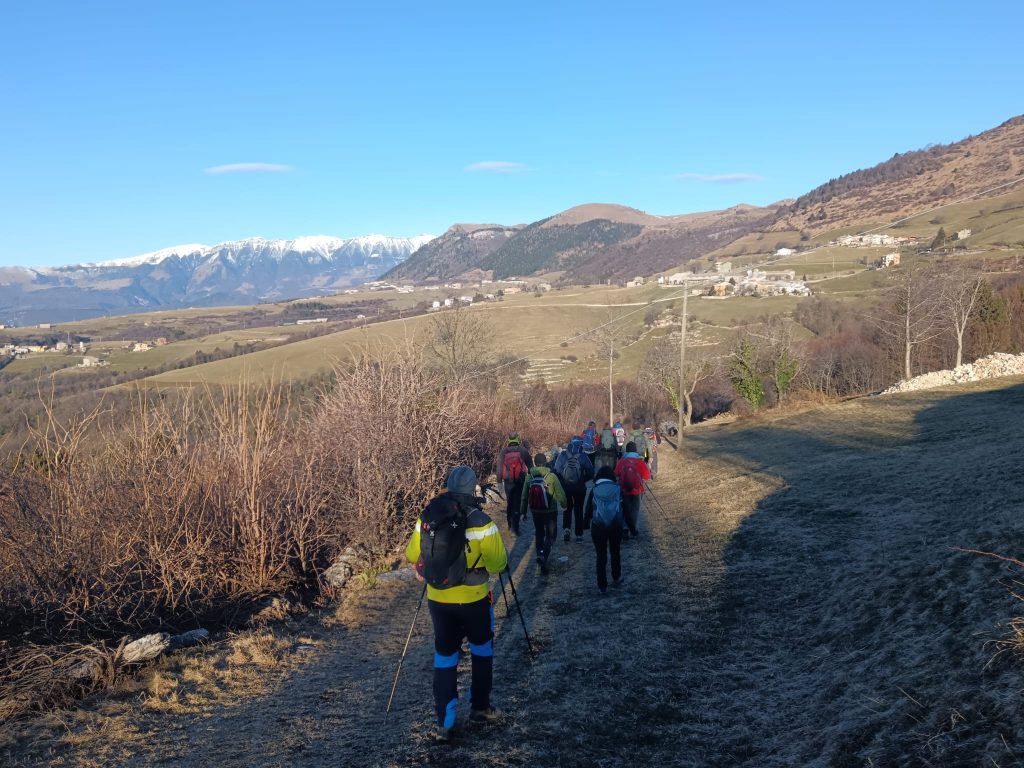
It is the shortest stage of the Cammino, with limited elevation gain, offering a bit of relief after long and demanding stages, while passing through characteristic hamlets and deep ravines.
Route
The stage starts at the parish church of Erbezzo and follows the outer road of the village heading north. After about 500 metres, turn left onto a small lane that passes beside the B&B La Stua. Shortly afterwards, the road becomes an old mule track bordered by dry-stone walls, leading to the evocative hamlet of Giodi.
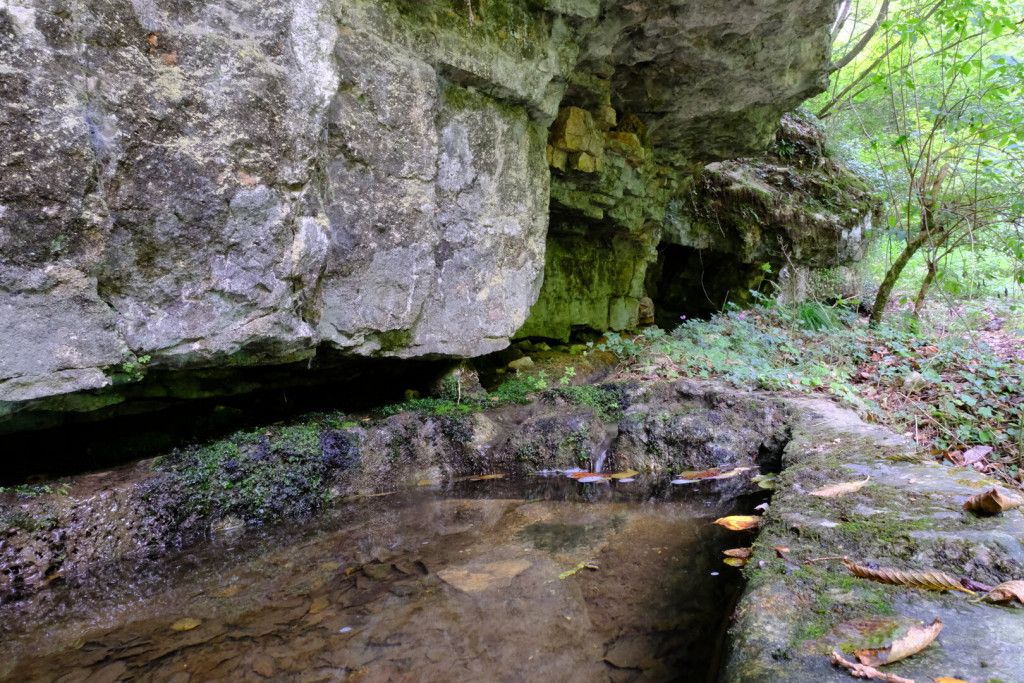
From there, continue along a paved road that passes through the hamlets of Ragazzini, Spinelli and Staffor, until reaching the charming little church of San Pietro. Turn right and continue through the hamlets of Dosso and Fasani di Sotto, where you take a descending dirt road on the right. This road becomes a footpath that drops to the bottom of the Vajo dei Falconi, crosses it and climbs up to the small village of Ceredo.
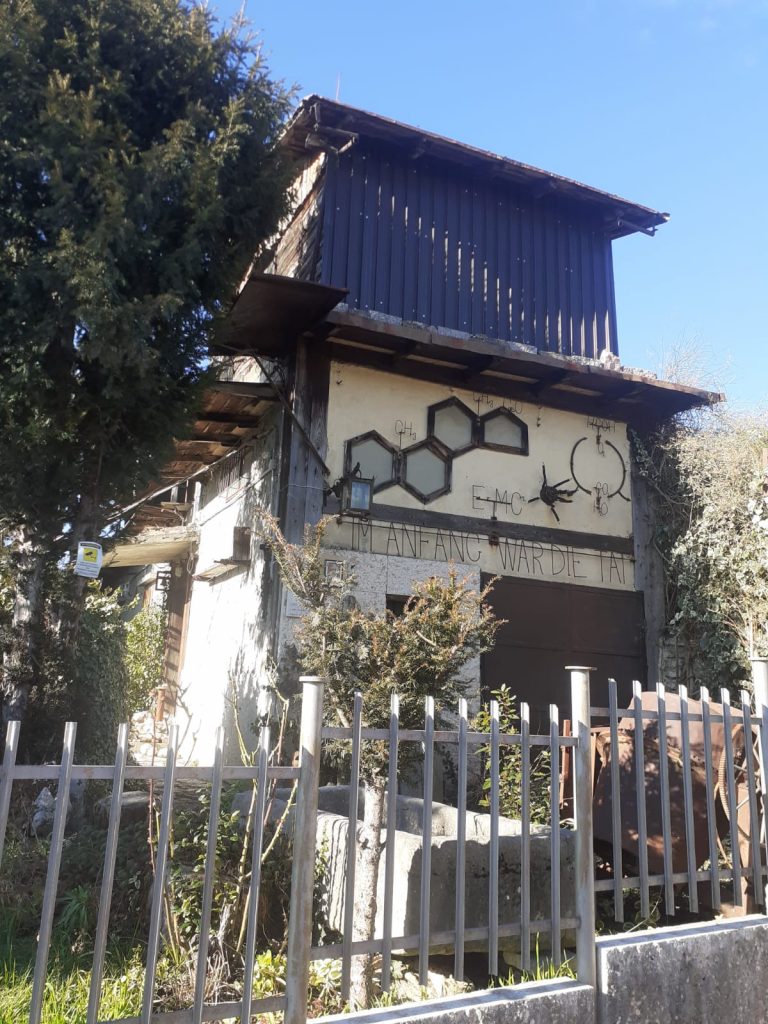
After passing the church and the well-known isba of Don Benedetti – the priest who lived here and left a deep mark on Lessinia – descend along a dirt track and then on asphalt until a hairpin bend above the Vajo della Marciora. Shortly beyond, on the right, you come across a beautiful fountain. From here, follow the Sentiero dei Molinari, which heads south and gradually climbs until it joins Via Giuseppe Verdi, the road leading to Sant’Anna d’Alfaedo.
After about 150 metres, leave the main road and turn left: a wide path leads to the hamlet of Cona. Turn right again and take the uphill lane that reaches the entrance bend of Sant’Anna d’Alfaedo, from where it is about 500 metres to the church square.


Where to Eat
currently being updated
Where to Sleep
currently being updated
A Glimpse of Stage 6



Must-See
The Hamlets of Erbezzo
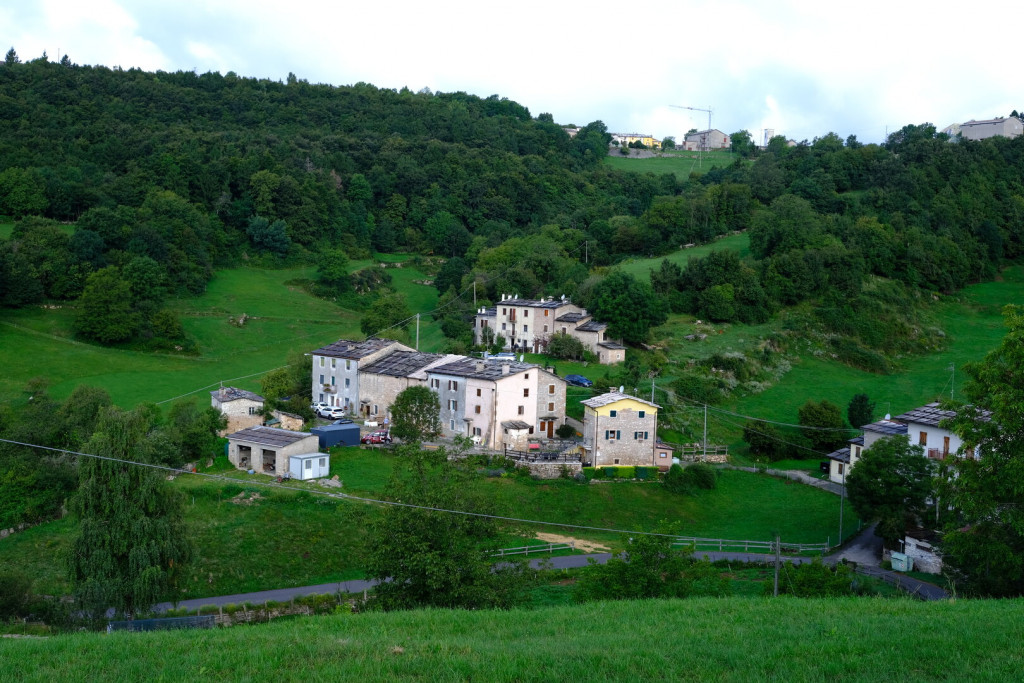
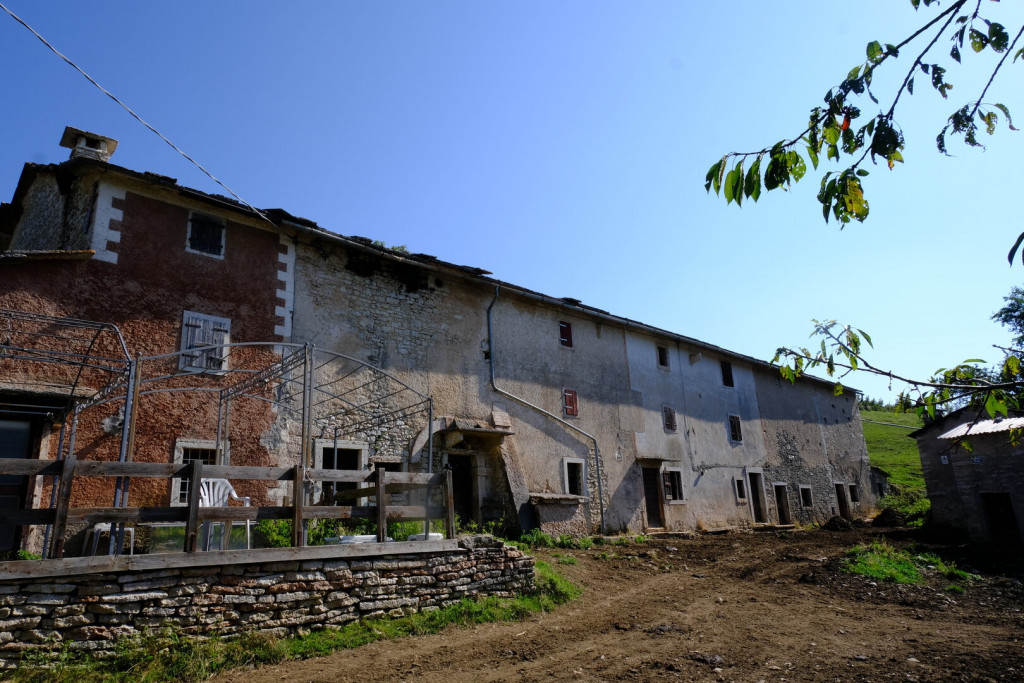
Many hamlets around Erbezzo are worth a stop, even just to notice a small detail that reflects the taste and care of their inhabitants. There is the pleasure of making a courtyard, an access lane, a house façade or a garden corner more welcoming: a geranium blooming inside an old log, a blue cushion of aubrieta flowering in spring on a stone wall, or a small grove of seaside daisies.
Almost every hamlet also preserves another distinctive sign, this time not for beauty but for ancient devotion: at the entrance or at a crossroads one often finds small roadside shrines, sometimes protected by a grate and decorated with flowers (often plastic), or stone crosses—simple or monumental—depending on the faith and means of those who once erected them.
The Church of San Pietro at Staffor
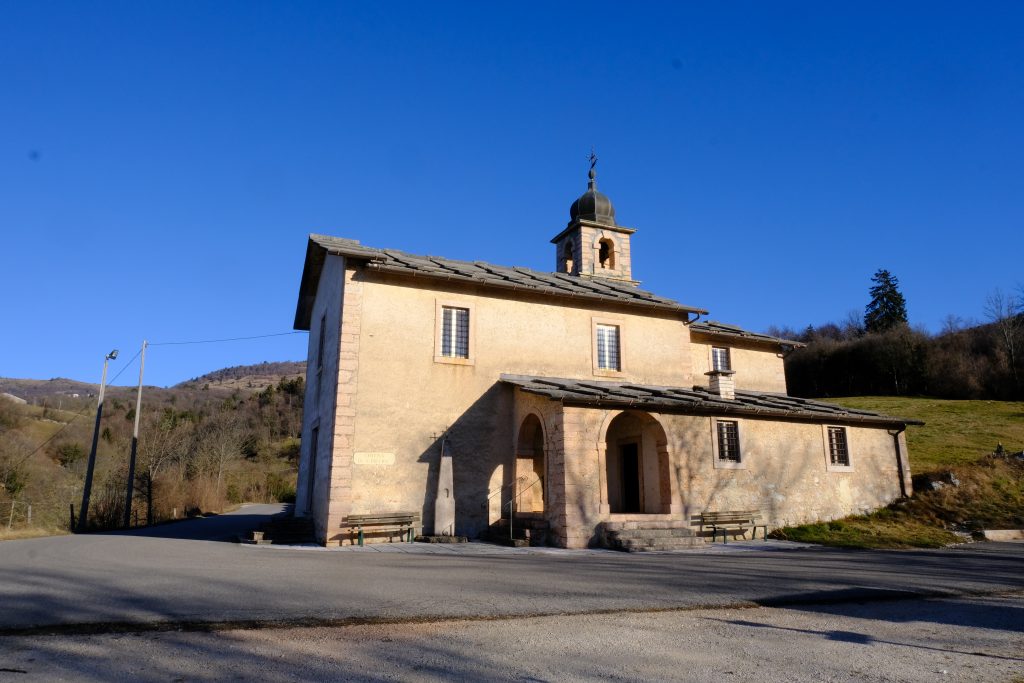
The small Church of San Pietro was built at the end of the 18th century by the inhabitants of Staffor, who wished for a place of worship nearby, since the parish church was difficult to reach, especially in winter. Built in stone, it features a gabled façade and a small bell tower. Construction began in 1788 and was completed in 1801; in 1832 a sacristy with a portico in front was added on the right side.
In front of the portico rises a stone spire with a carved cross, topped by a small iron cross. At its center is a niche containing a statuette of Saint Peter, above which the date 1694 is inscribed.
The Great “Vaji” of Lessinia

,,,,
A Special Figure of Ceredo: Don Alberto Benedetti
Ceredo is remembered as the home of Don Alberto Benedetti, priest, scholar, and intellectual who deeply influenced the life and culture of Lessinia in the second half of the 20th century. Born here in 1911, he returned after the war as parish priest and immediately devoted himself to his community: he promoted new farming techniques, encouraged the activity of slab-stone quarries, and, instead of living in the rectory, arranged his own house – his “isba” – in his personal way.
That house became, until his death in 1997, a place of meeting and dialogue, where Don Alberto shared a wisdom infused with faith and love for others. His teachings encouraged people to love the land, to work even without personal gain, to value what they had, and to live simply.
A religious and philosophical lesson that still today inspires interest and admiration, far beyond the borders of the Veronese mountains.
Sant’Anna d’Alfaedo

In the Scaliger era, Sant’Anna d’Alfaedo was known as Faedo and often mentioned together with Cona and Ceredo. At the end of the 17th century, with the construction of the new parish church dedicated to Saint Anne, it took on its present name.
The church, with its 45-meter-high bell tower, dominates the village center. Built in stone, the façade features a statue of Saint Anne. The interior, with a single nave and barrel vault, contains four side chapels dedicated to Saint Joseph, the Blessed Virgin of the Rosary, the Sacred Heart of Jesus, and to Saints Zeno, Roch, Lawrence, Joachim, Anne, and Martha. Of particular value is the altarpiece on the main altar, depicting Saint Anne with the Virgin and Child, a work by Antonio Balestra (1738).
The ancient road coming from the south once entered the village through a hamlet located lower than the present-day center, where a large stone-arched fountain-washhouse still stands.
In more recent centuries, Sant’Anna d’Alfaedo has become the most important center of western Lessinia.
The Paleontological Museum of Sant’Anna d’Alfaedo

Housed in a modern stone building, the Museum of Sant’Anna d’Alfaedo preserves a rich collection of archaeological finds from western Lessinia, most of them discovered during the exploitation of the lastame quarries (Scaglia Rossa limestone). Among the most spectacular pieces are the skeleton of a shark about 5.5 meters long, a sea turtle, another shark specimen with hundreds of perfectly preserved teeth and vertebrae, a large mosasaur, as well as fish, echinoids, and ammonites.
The prehistoric section, also on the first floor, retraces human history in the area from the Neanderthal, about 50,000 years ago—represented by two figures painted in red ochre on stone (a shaman and an animal, perhaps a feline) from the Fumane Cave—up to the castellieri settlements of around 3,000 years ago. The strong prehistoric presence in Lessinia is explained by the abundance of flint, a material that, thanks to a network of medium- and long-distance exchanges, was distributed across much of northern Italy. A famous case is that of Ötzi, the Neolithic mummy of the Similaun, who carried flints originating from this area.
The museum is part of the Regional Natural Park of Lessinia, managed by the local Mountain Community, and is connected in a network with other museums and protected areas of the region.