


Stage 7
From Sant’Anna d’Alfaedo to Negrar di Valpolicella
This stage marks the return of the Cammino from Lessinia to Valpolicella, linking the municipalities of Sant’Anna d’Alfaedo and Negrar di Valpolicella.
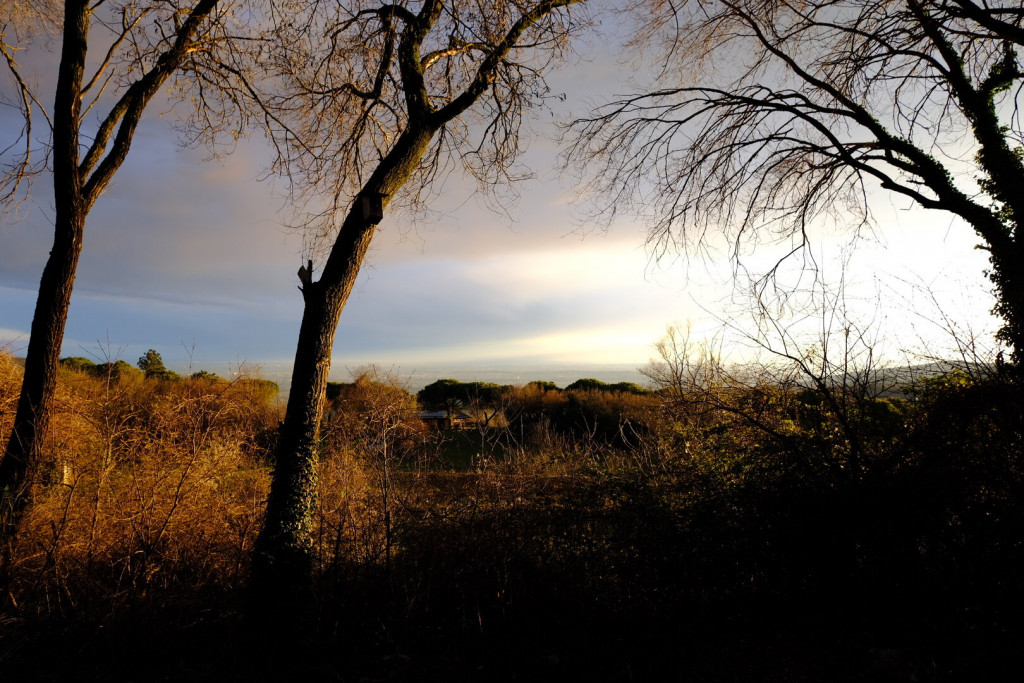
The route crosses landscapes in transition, from the chestnut woods of the plateau to the wide expanses of vineyards that characterise the lower part of the valley, the heart of local wine production.
Along the way you encounter true natural and historical “monuments”, such as the majestic Ponte di Veja, one of the largest natural arches in Europe, and the Villa of the Mosaics in Negrar, evidence of the ancient Roman presence in this area.
ROUTE
The stage begins behind the parish church of Sant’Anna d’Alfaedo, following Via G. Verdi southwards. You walk along the stretch already covered the previous day for about 350 metres, then turn right onto a path that descends among majestic chestnut trees to the hamlet of Pozze.
At the end of the hamlet, turn left and follow a pleasant path to a small stream located below the village of Vaggimal. After crossing it, climb for about 200 metres to a dirt road that turns left, skirting the Crestana promontory and crossing further chestnut woods.
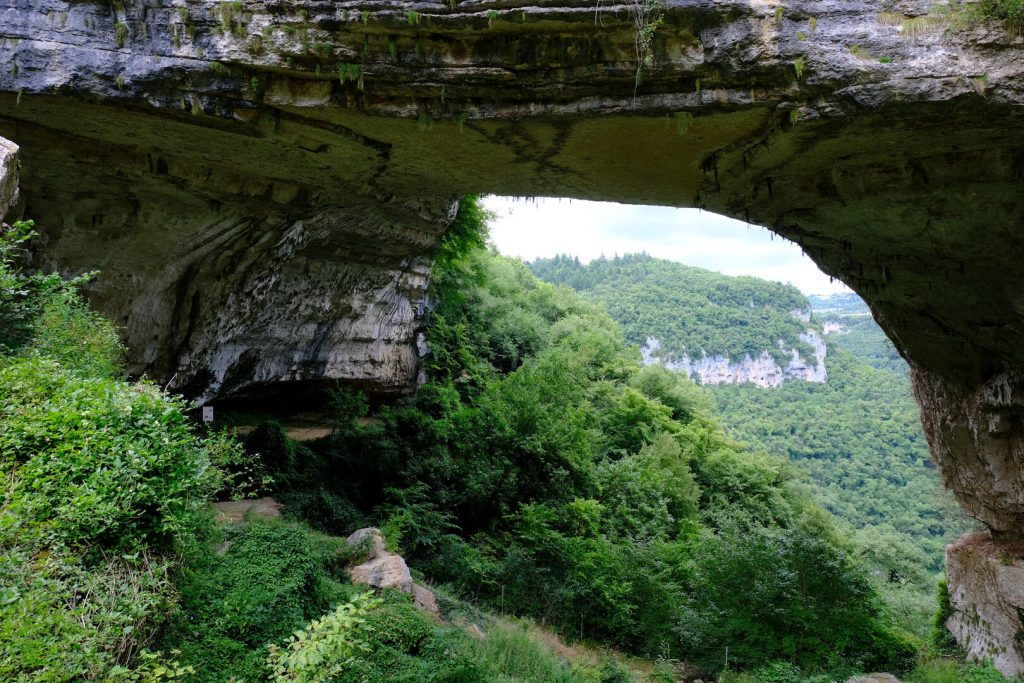
After passing through a gate (usually open), turn immediately left and reach the Ponte di Veja, one of the most impressive natural arches in Europe. It is worth descending into its ravines and spending a few minutes visiting this extraordinary geological monument, a testimony to the shaping power of nature.
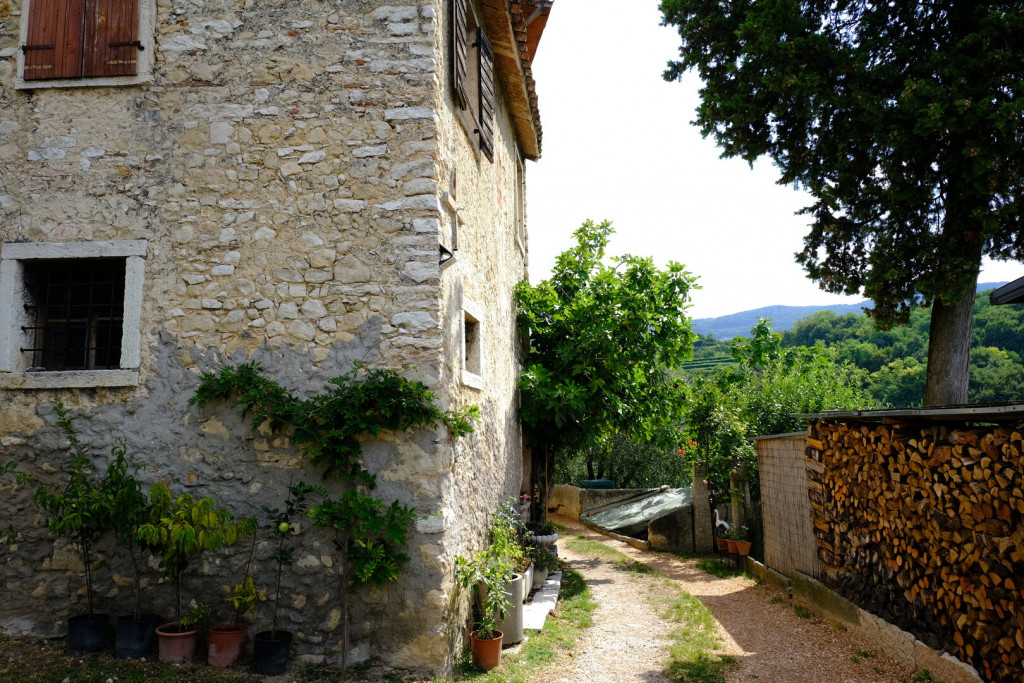
From the Ponte di Veja, continue along a partly paved road to the village of Giare, where local stone dominates the architecture. After passing the parish church, descend towards the Sentiero delle Sengie, then after about one kilometre take a dirt road that, with a short uphill stretch followed by a flat section, leads to the Croce dello Schioppo, an ideal spot for a break, also thanks to a nearby shop selling traditional cured meats and cheeses.
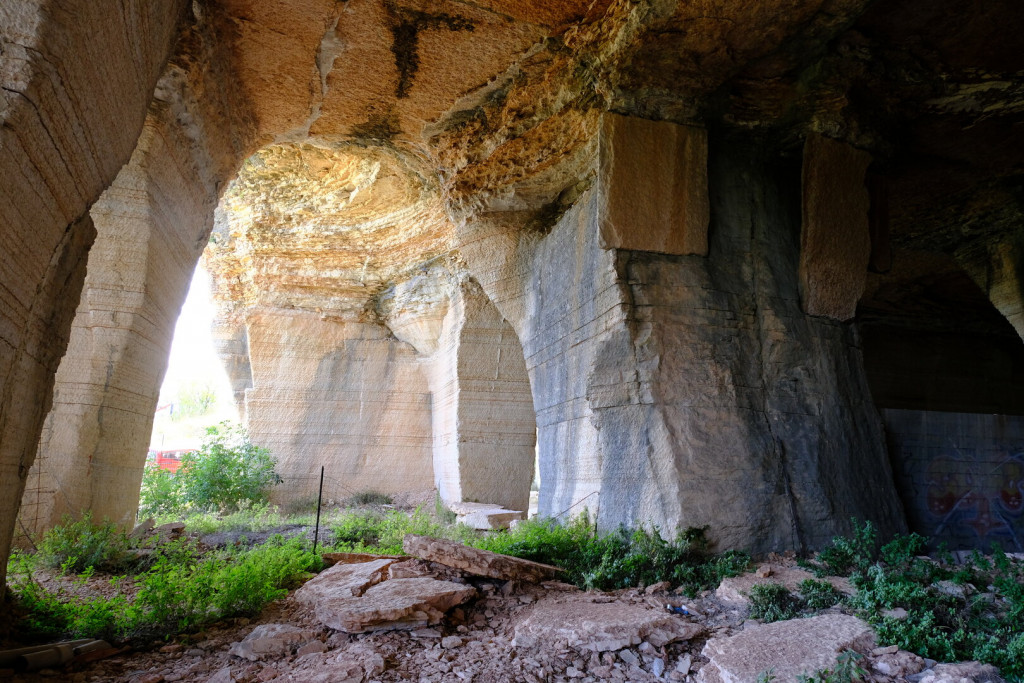
Continue along the southern side of Mount Nuvola until you reach the Fiamene plateau. From here the path descends steeply to the village of Fane and, after another descent and a brief climb, reaches the Prun quarries, an extraordinary “monument to labour” created by generations of quarrymen and stonecutters who shaped Lessinia’s stone for centuries.
After crossing the village of Prun, take a descending lane after the cemetery that passes through several characteristic historic hamlets (Monspigolo, Capo, Noval), until you reach the provincial road. Cross it and follow Via Volpare.
You now enter the hamlet of Villa, where you can visit (on opening days) the Roman Villa of the Mosaics of Negrar, a splendid late-imperial Roman villa recently brought to light. A little further on you also pass the elegant Villa Rizzardi, dating from the late nineteenth century.
The route continues past the ancient farmhouses of Pojega and, in about 500 metres, leads to the centre of Negrar di Valpolicella, the endpoint of the stage.


Where to Eat
currently being updated
Where to Sleep
currently being updated
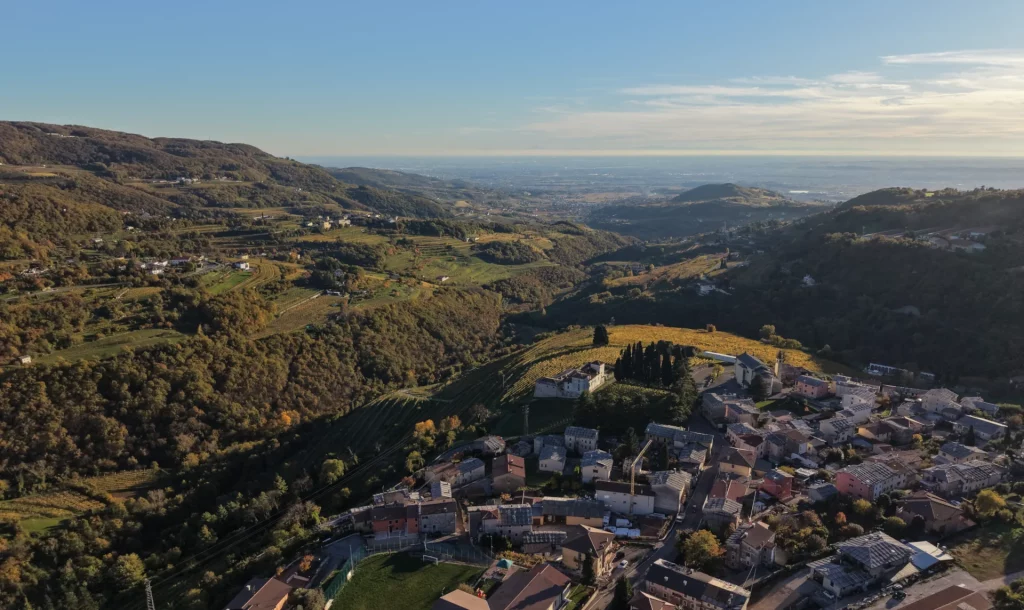
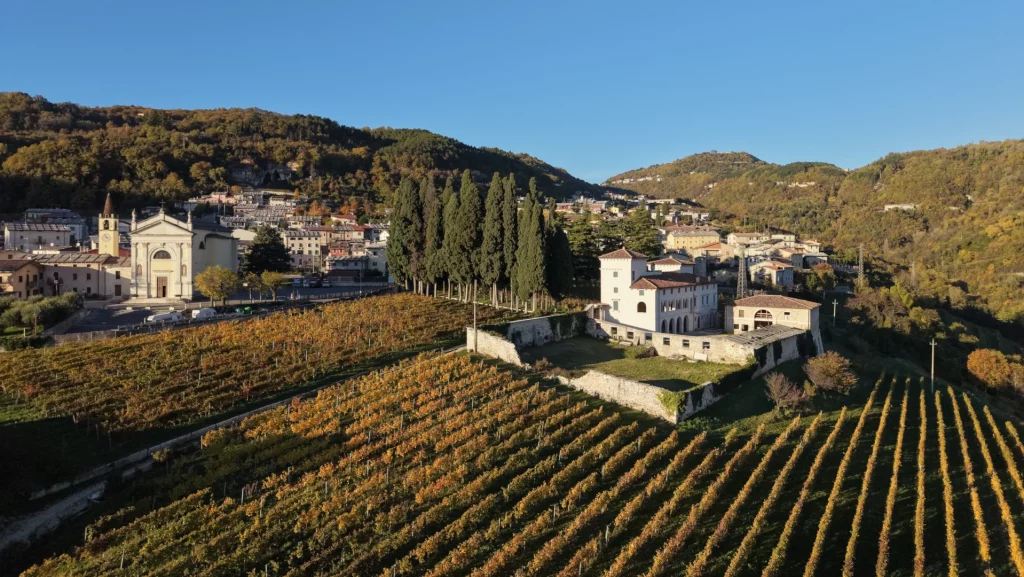
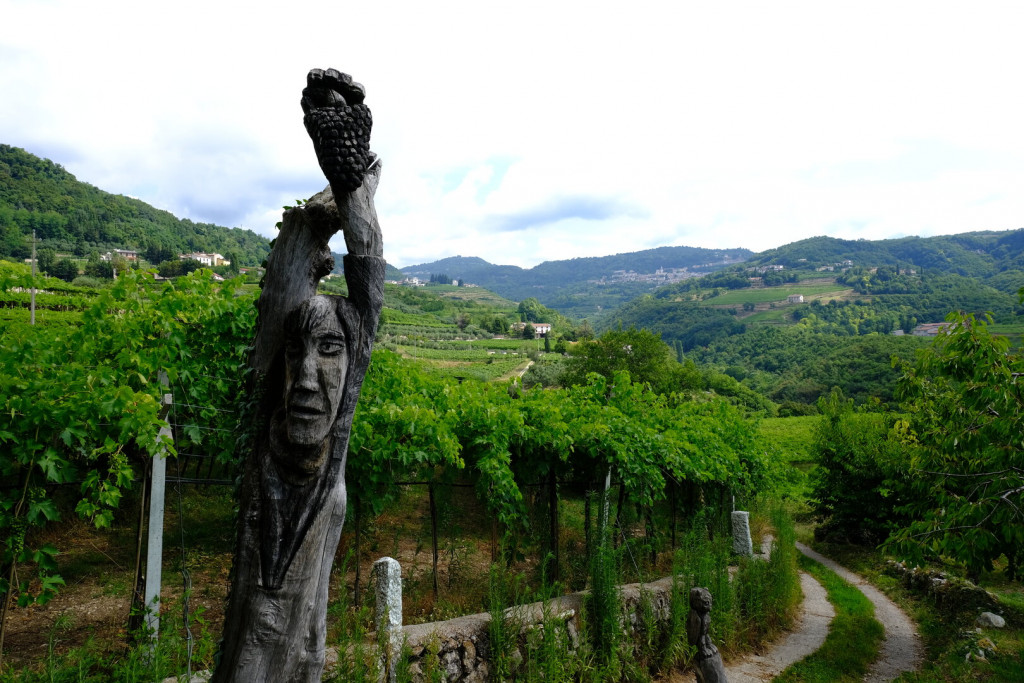
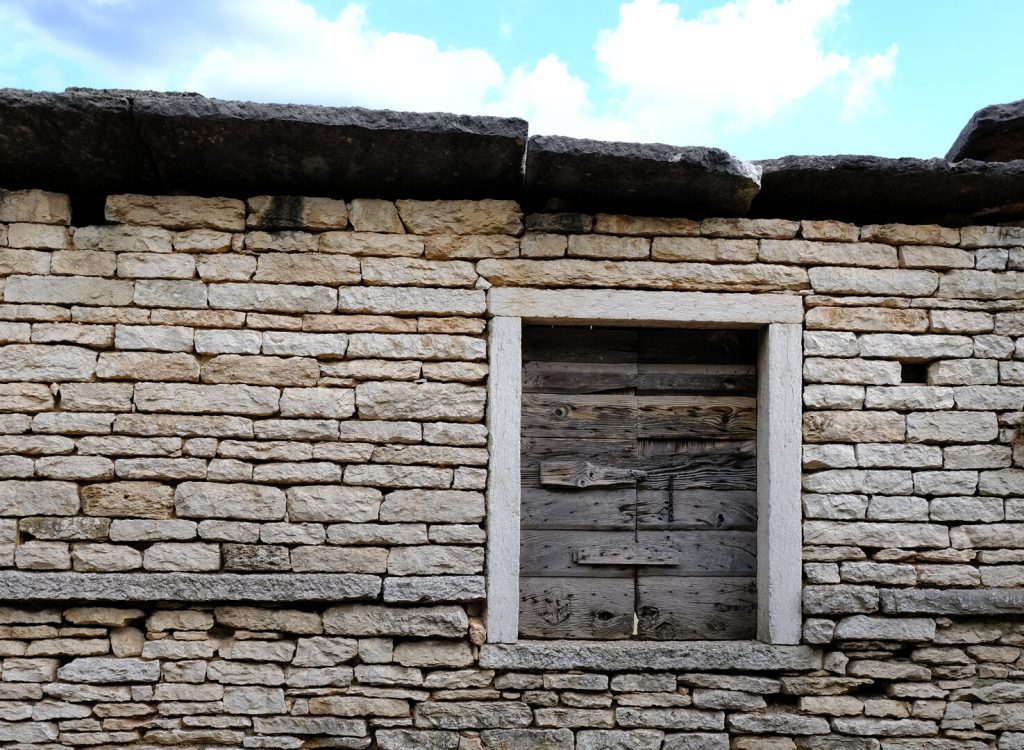
A Glimpse of Stage 7
Must-See
IL ponte di Veja
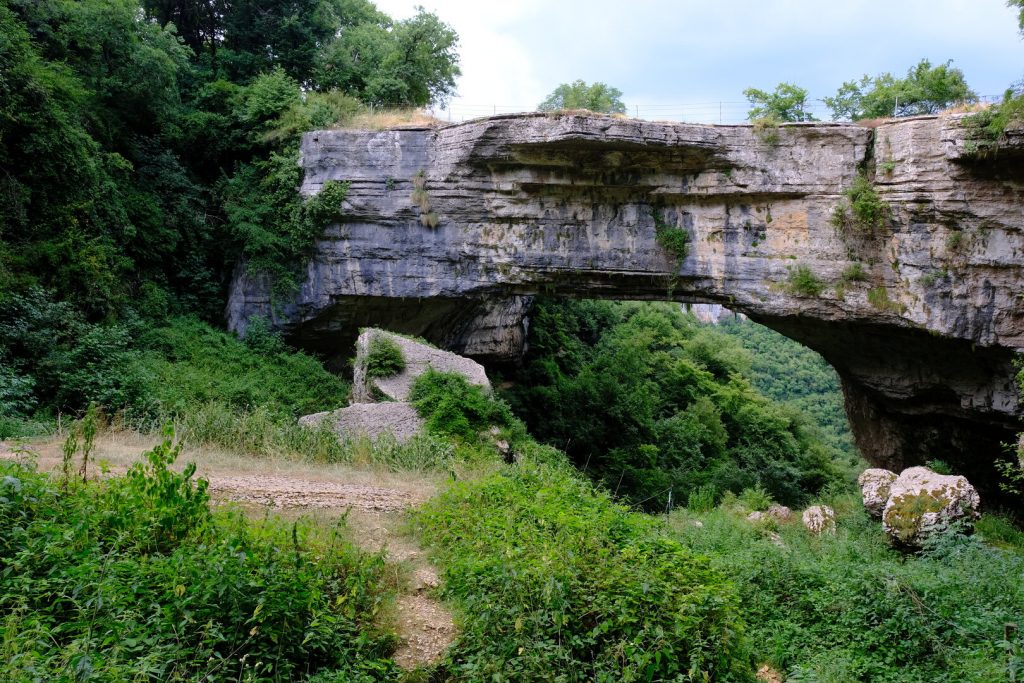
The Ponte di Veja is a spectacular natural limestone bridge, considered one of the symbolic landmarks of Lessinia. Its arch spans about 40 meters, with a minimum thickness of 9 meters and a width of 20. It was formed by the collapse of the inner vault of a large karst cave more than 40 million years ago; beneath the arch, the fallen boulders are still visible. At its base open several side caves, inhabited by humans since the Paleolithic, as shown by the archaeological finds discovered there.
Known since the Middle Ages, the Ponte di Veja is thought to have inspired Dante in his description of the circles of Hell and Malebolge. Its fame also reached art: it appears in one of the frescoes of the Camera degli Sposi in the Ducal Palace of Mantua, a masterpiece by Andrea Mantegna, a painter well acquainted with these valleys.
The Quarries of Prun
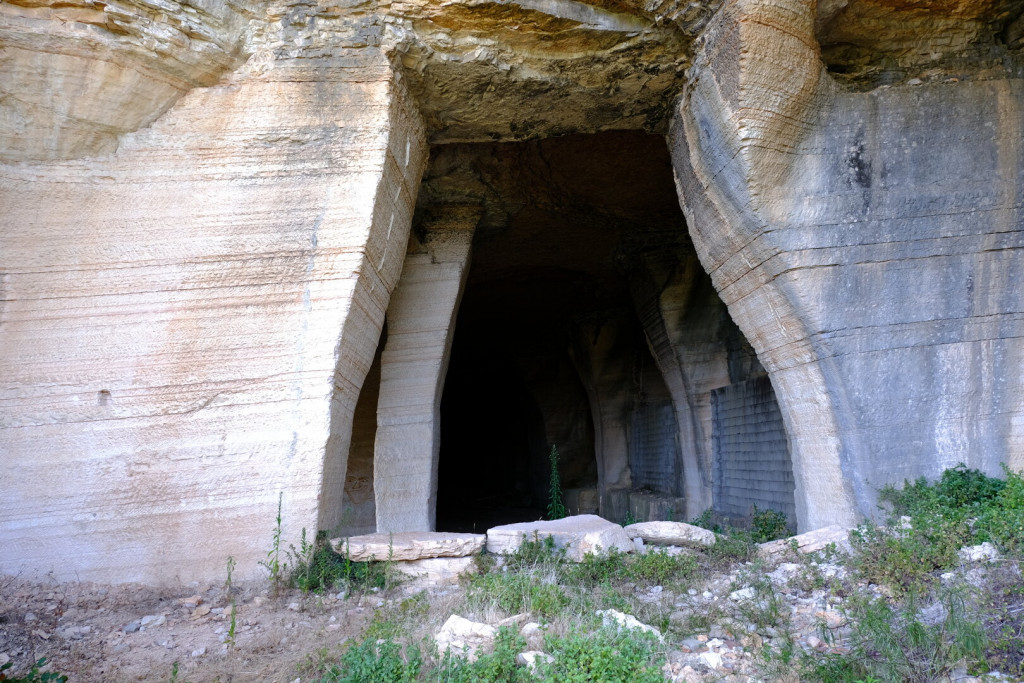
Above the village of Prun lies a long row of openings: these are the entrances to the ancient stone quarries, kilometers of galleries excavated over centuries – perhaps millennia – to extract slabs used for houses, churches, the paving of squares and courtyards, and to create terraced fields along the slopes. As early as Roman times, as evidenced by the Villa of the Mosaics (3rd century BC), this stone was already used for flooring.
The Scaglia Rossa, or Pietra di Prun, is a limestone made up of thin layers – on average just a few centimeters thick – separated by films of clay. Quarrymen took advantage of this natural structure: once the upper layer was identified, solid enough to serve as the “roof” of the gallery, they created a working platform and dug around the edge of the layer below, managing to lift and remove it thanks to the clay. The process was repeated layer by layer, down to the floor.
In the mid-20th century, a law banned underground quarrying, and extraction activities moved to areas where the Scaglia Rossa layers emerged at or near the surface.
Noval di Torbe

Noval is an ancient hamlet located just a few hundred meters from the center of Torbe, preserving three authentic jewels of historical and artistic interest. At the entrance to the settlement stands a small frescoed chapel: on the back wall the Madonna of the Rosary is depicted with Saints Anthony of Padua and John the Baptist; at the sides appear Saint Michael the Archangel, striking the dragon, and the Archangel Gabriel with Toniolo. On the vault, an inscription can still be read: IO GIO. FECI FAR 1683.
Continuing further, one finds a slender rectangular dovecote tower. It had neither military functions nor was it meant for carrier pigeons, but instead represented a status symbol of its wealthy – and today unknown – owners.
Finally, in the nearby Corte Casa Quintarelli stands an elegant building with portico and loggia, of ancient design, considered the prototype of the many houses and villas with this architectural style spread throughout Valpolicella…
The Roman Villa of Negrar – Villa dei Mosaici

The Roman villa of Negrar was first identified at the end of the 19th century, in the hamlet of Villa. In 1922, systematic excavations conducted by the Archaeological Superintendency of Veneto uncovered, in the residential section, a large rectangular hall with mosaic floors: within a refined geometric decoration in polychrome tesserae were four figurative panels – of which only two survive – depicting putti driving racing chariots drawn by two horses. Today, these mosaics are preserved in the Archaeological Museum of Verona.
In 2016, research resumed thanks to the collaboration between the Superintendency and the Benedetti and Franchini wineries, owners of the land. Excavations brought to light not only the great hall with its mosaic floor but also a wide “productive” area paved with stone slabs – a feature that makes the complex particularly significant, especially considering that the area was already renowned in Roman times for the production of fine wine.
The Garden of Villa Rizzardi
In the heart of the Pojega estate in Negrar, on the hills of Valpolicella, Count Antonio Rizzardi commissioned in 1783 the architect Luigi Trezza, a prominent figure of Venetian Neoclassicism, to design the Garden of Pojega: the last great example of an Italian-style garden, enriched with elements inspired by the French fashion of the time.
The project included four main architectural features, arranged with geometric order and connected by avenues of hornbeams and cypresses. At the northeast corner of the palace lies the Laghetto, an oval fishpond with a central fountain statue, whose fish population is documented as early as 1843. To the northwest rises the Teatro Verde, a classical-style green theater with stage, proscenium, orchestra, and semicircular cavea, where parallel boxwood wings create a funnel-like perspective. The Belvedere, the highest point of the garden, is marked by an octagonal tower with a terrace and candelabra balustrade, accessible through a scenic double staircase. Finally, the Tempio, built in rustic style, is an open-air rotunda with walls of “grotesque stones” and niches housing statues of Venus, Diana, Minerva, and Hercules.
After nearly three years of meticulous restoration, the Garden of Pojega will reopen to the public on April 1, 2025, ready to be enjoyed once again in its original beauty.