

Stage 1
From San Pietro in Cariano to Fumane
This is the first stage of the Cammino del Vino e della Pietra, the official starting point of the route. With the hope that every step brings discovery, every encounter brings exchange, and every effort becomes gratitude. Enjoy the walk!
ROUTE
The first stage begins in Piazza Ara della Valle and leads to Piazza San Giuseppe, named after the 17th-century oratory dedicated to the saint, built in front of the magnificent Palladian villa. From here, the route follows Viale della Chiesa, passing the neoclassical atrium of Villa Cometti and, a little further on, the ancient Corte di Crear. It then reaches Pulle, marked by Villa Saibante Monga and Villa Pulle Monga (today Galtarossa).
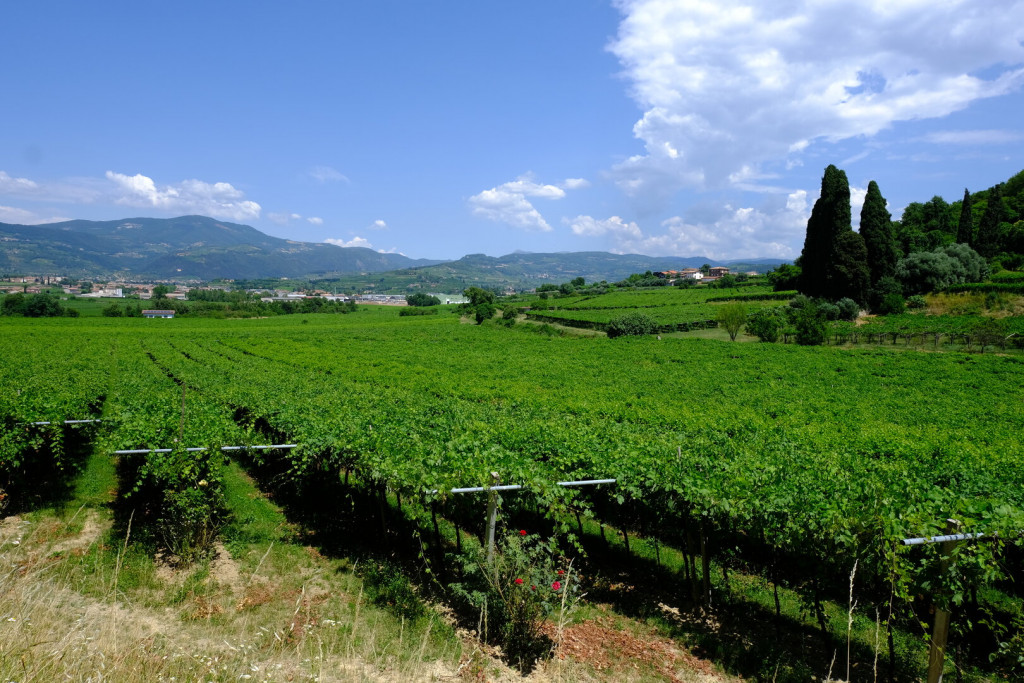
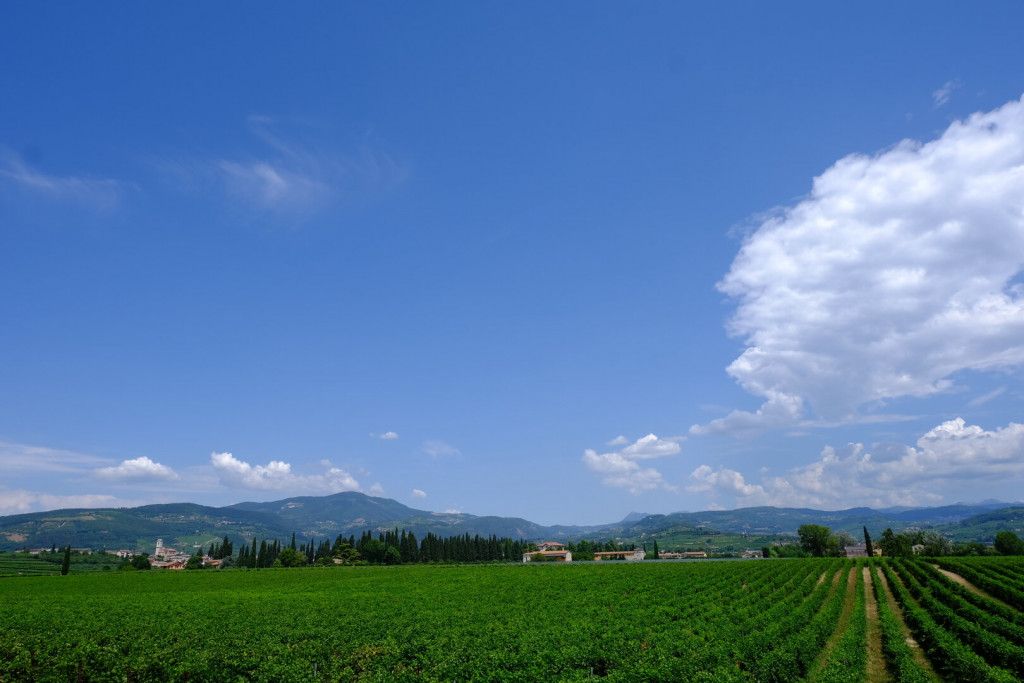
Beyond the municipal recycling center, the path opens onto wide vineyards that lead to the charming hamlet of Negarine, followed by the small Romanesque church of San Carlo. Continuing along the road parallel to the railway, walkers come across the monument to former Nazi camp internees. Soon after, the route leaves the main road for country lanes among the vineyards, passes under the highway, and reaches the SP4, which is crossed to take the road leading to Villa Serego Alighieri.
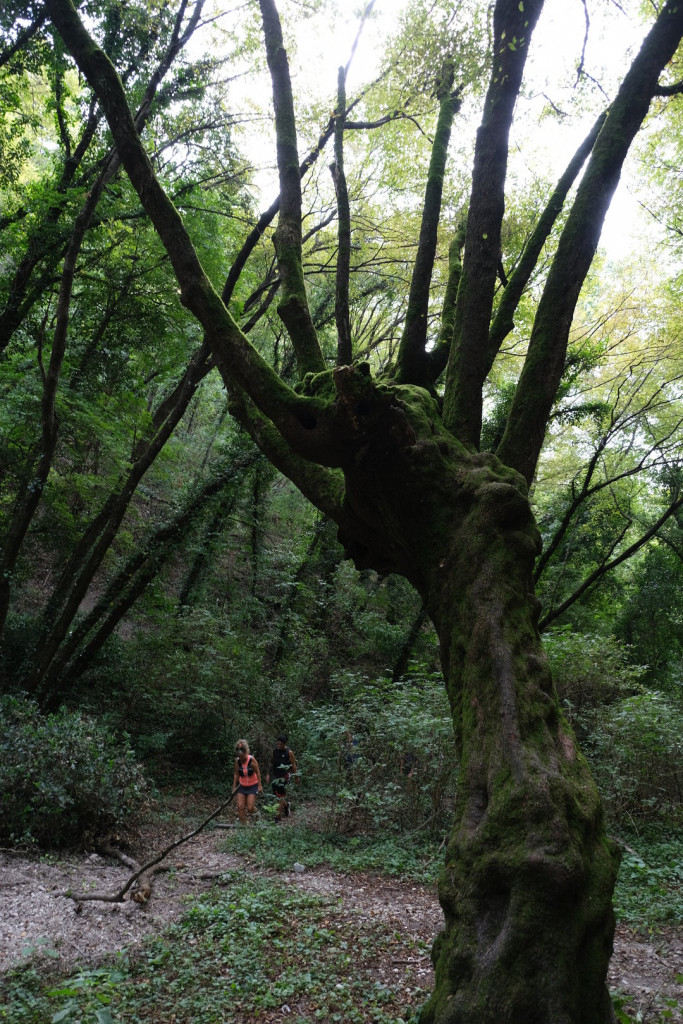
The trail then enters the village of Gargagnago and, after the parish church, climbs along a well-maintained path to San Giorgio Ingannapoltron, with its splendid Romanesque Pieve and sweeping views of Lake Garda. From here, the route briefly follows the road to Mazzurega, before leaving it to descend on a path towards the hamlet of Marega. Finally, it continues along quiet country lanes, passing by Villa della Torre, before reaching Fumane, where the first stage ends.


Where to Eat
currently being updated
Where to Sleep
currently being updated
A Glimpse of Stage 1

Must-See
Ara della Valle
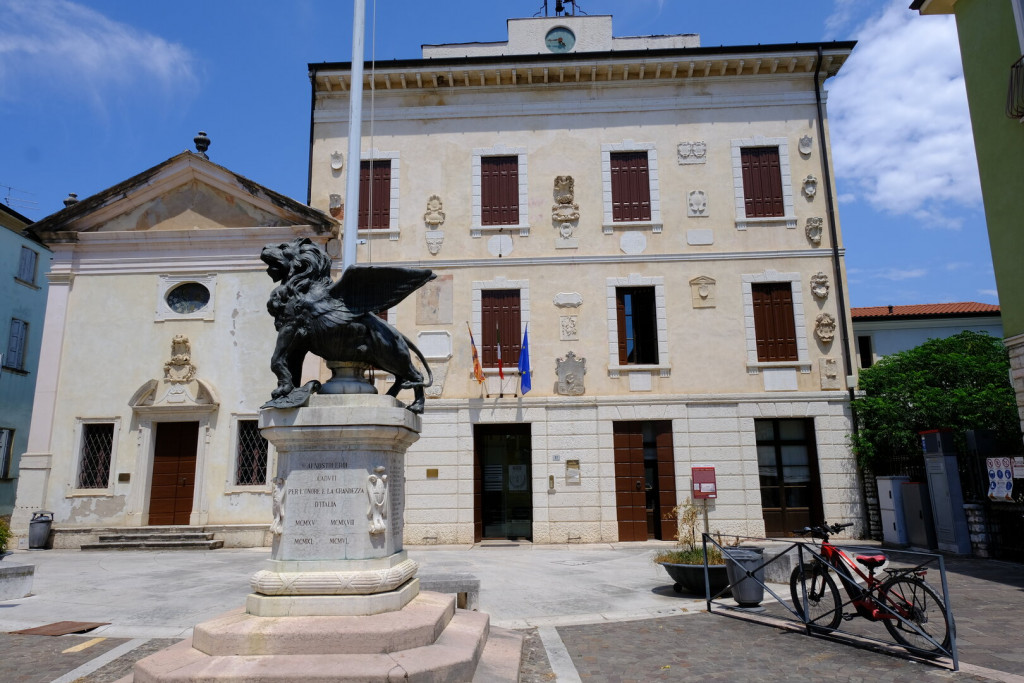
On Colle Menzago, in San Pietro in Cariano, overlooking today’s Piazza Ara della Valle, stands a building that for centuries represented the political and administrative center of Valpolicella: the former town hall, once the seat of the Vicario of Valpolicella.
This hill, along with nearby Colle di Cariano—where the parish church stands—forms the historic core of the town. Beginning in the mid-15th century, this is where the mayors and councillors of the valley’s various communities would gather under the guidance of the Vicario. The original structure featured a public loggia.
Next to it, toward the end of the 17th century, a small chapel dedicated to Saint Clare of Assisi was built, and it is still visible today.
During the time of the Serenissima Republic of Venice, the Vicario was a Veronese nobleman, appointed directly by Venice. His role was to oversee and coordinate the civic life of the many Valpolicella communities, serving as a point of reference for administrative and legal matters. He was not merely a figurehead, but a true institutional mediator between the local autonomies and central authority.
Villa Serego Allighieri
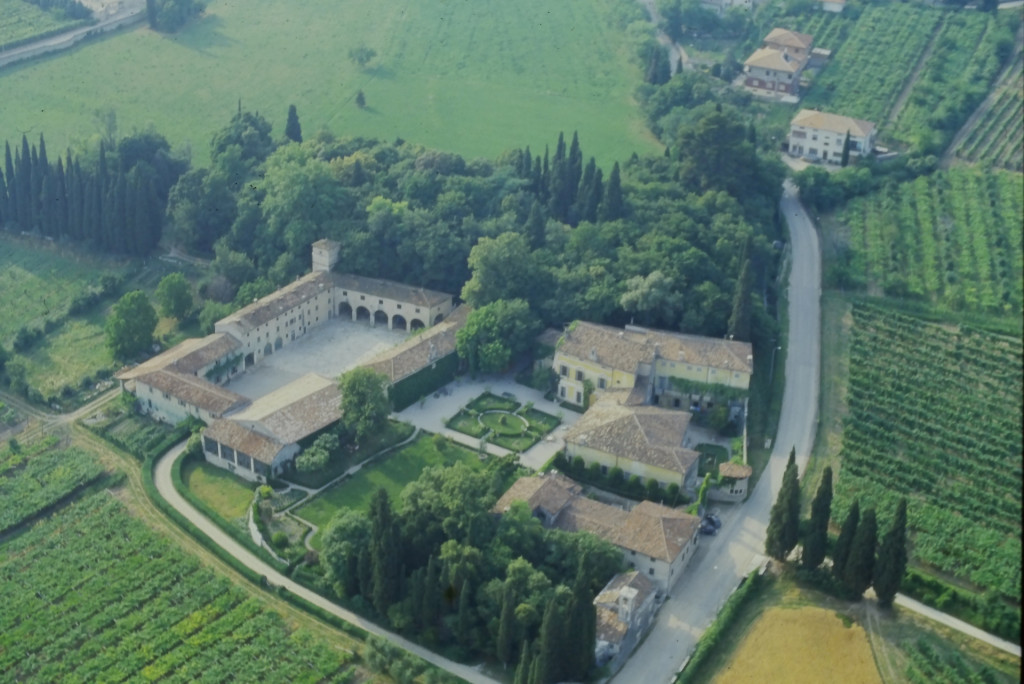
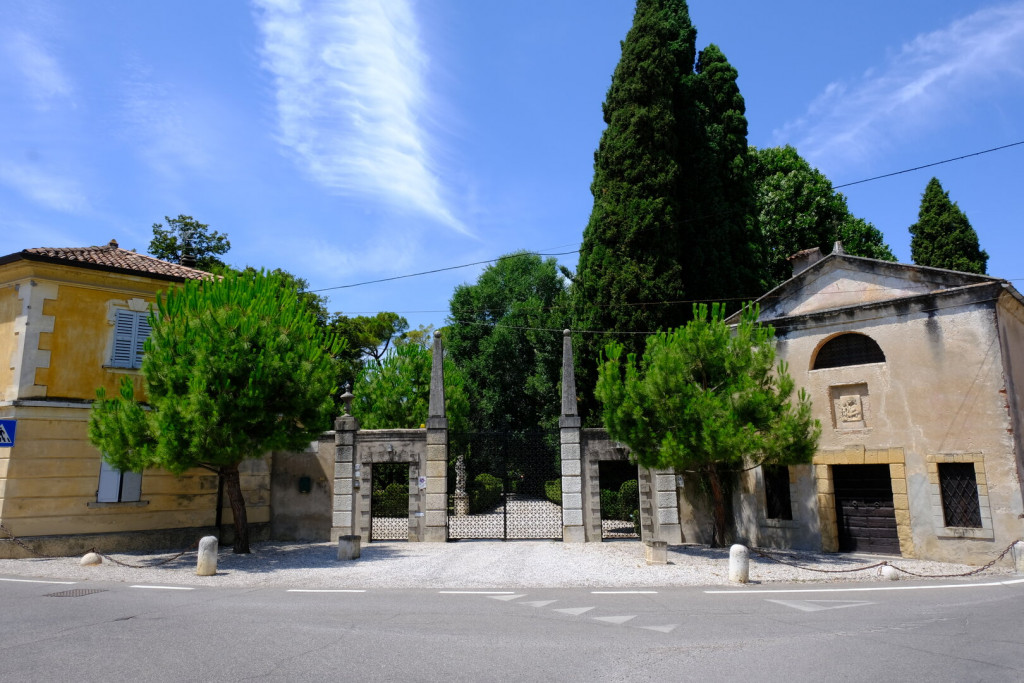
Surrounded by a wide stone wall and nestled at the foot of Colle San Giorgio, the villa of Gargagnago appears as a noble residence of great charm, set in a scenic context where architecture and nature blend in rare harmony. The silent presence of the hill in the background enhances its elegance and tells the story of the deep connection between culture and landscape that defines Valpolicella.
The oldest core of the villa likely dates back to the 14th century, when Pietro Alighieri, son of Dante, purchased land here in 1353. Over the following centuries, the original structure was expanded and transformed, eventually becoming the current country residence, composed of several buildings and spaces.
Inside, the villa houses lounges, studies, dining rooms, and bedrooms, enriched with fireplaces, stucco work, heraldic crests, mosaics, and frescoes. Two rooms, in particular, deserve special attention:
And a 19th-century dining room, where Veronese painters created an illusionistic loggia with Ionic columns overlooking fantastical landscapes, and a ceiling painted with a slice of sky crossed by swallows in flight.
A large 18th-century hall, frescoed around 1760–1770, with walls decorated with trompe-l’œil statues of classical deities (Neptune, Minerva, Juno, Mercury, Diana, Apollo) and monochrome medallions featuring profiles of Roman emperors;
San Giorgio Ingannapoltron
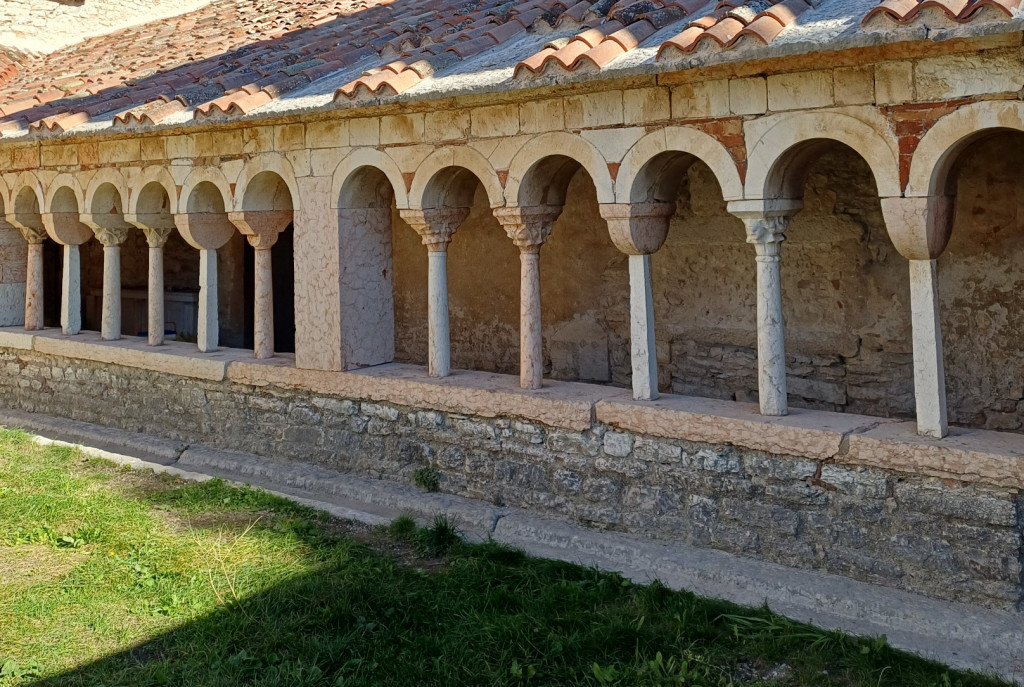
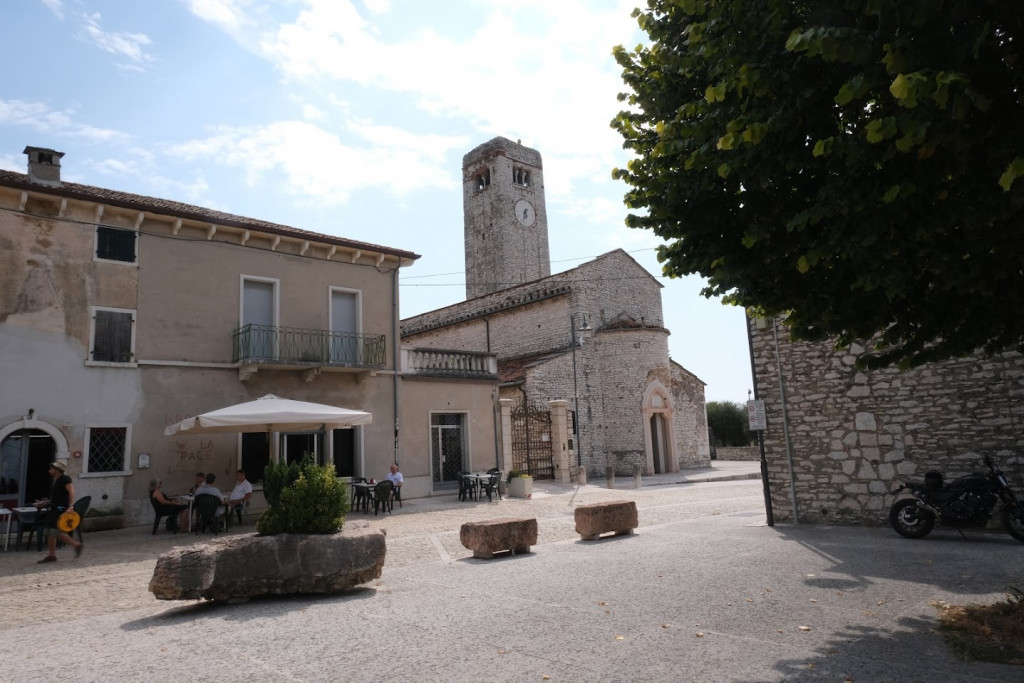
Perched on a small hill stands the church of San Giorgio Ingannapoltron, one of the most fascinating places along the entire route.
Its name, both curious and evocative, comes from a popular transformation of the ancient toponym San Giorgio in Ganna. Over time, the word “poltron” (meaning “lazy” in Italian) was added—perhaps affectionately or humorously—by the local people.
The current church rises on the site of ancient Roman sacred grounds, frequented when the area was inhabited by the Arusnates, a people possibly of Etruscan origin, to whom the Romans allowed the continued use of their Pagus and the worship of their own deities. Blocks and fragments of those pagan buildings were reused in the Christian construction—first during the Lombard period, and then in the Romanesque era.
As early as the first half of the 8th century, the church was an important religious center, served by many priests and equipped with a baptismal font. Inscriptions on the small columns of the magnificent stone ciborium state that the work was completed during the reign of King Liutprand (712–744), under Bishop Domenico. The texts also mention the rectors of the church, public officials involved in the project, and even the local sculptors who carved the ciborium: Orso, the master builder, along with his apprentices Gioventino and Gioviano—a rare written record of the artisan world of the time.
The current structure is entirely built of local stone, just like the homes in the small hamlet surrounding it. It features a dual-apse layout, typical of some Central European churches, and still preserves Lombard masonry in some parts. After the devastating earthquake of 1117, the eastern section, bell tower, and cloister were rebuilt—structures that are still accessible today.
In the western apse, visitors can admire a striking fresco of Christ Pantocrator, an example of the austere and symbolic spirituality of the era. Along one side of the Romanesque cloister, the ancient chapter house still stands, with original wall paintings. Behind the apse, remains of two Iron Age dwellings are visible, and a small museum on-site tells the archaeological and lithic history of the location.
To complete the experience, just on the hill opposite the cemetery, visitors will find a series of carved slabs that form the “Stonecutter’s Way of the Cross”, a contemporary work created by students and teachers of the Sant’Ambrogio School of Marble—a modern tribute to a millennia-old tradition still alive among these stones.
Villa della Torre
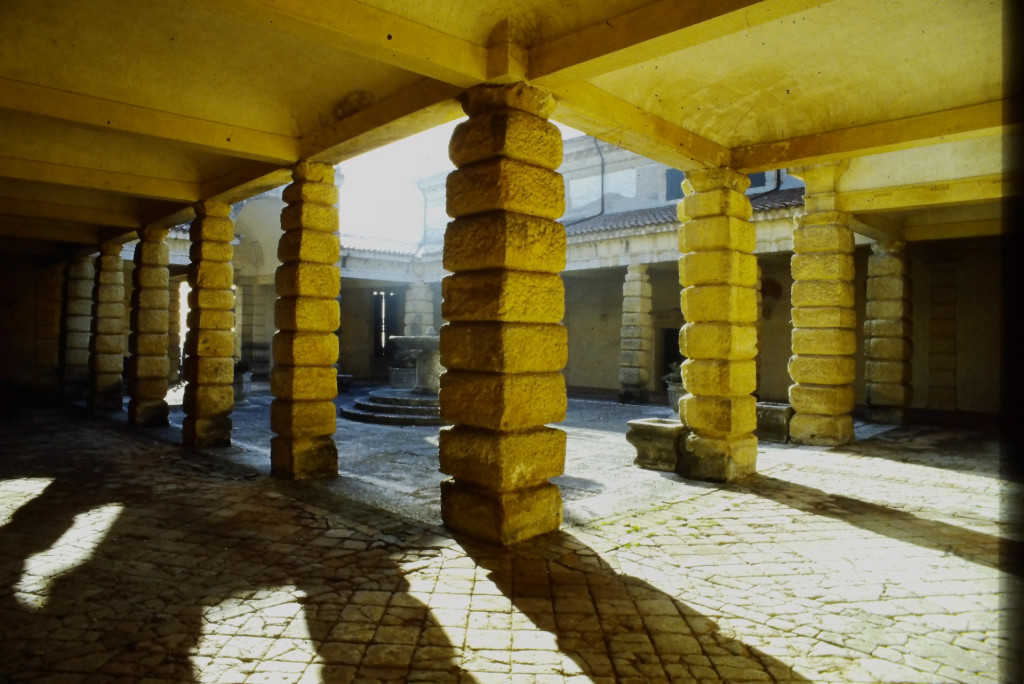
Just above the village of Fumane stands the extraordinary Villa Della Torre.
It was built in the 16th century at the initiative of Guido Della Torre, a descendant of a noble family that had taken over the property from the Maffei.
The villa is arranged around a large central peristyle, a colonnaded courtyard framed by an elegant portico with rusticated pillars. On the two longer sides, two symmetrical wings rise, each topped with towers that give the structure a bold, almost defensive appearance — yet highly theatrical at the same time.
Fountains, basins, and water channels, animated by jets and playful water features, run through the courtyard and the gently sloping garden. Statues, stone balustrades, grand staircases, and architectural viewpoints make the entire complex a unique example of the fusion between architecture, nature, and Renaissance symbolism.
Inside, the rooms — once frescoed, later decorated with stucco — still preserve majestic carved fireplaces, vaulted ceilings, and richly atmospheric spaces that tell of centuries of history and culture.
In the park, just steps from the main building, stands a small octagonal temple, attributed to the renowned Veronese architect Michele Sanmicheli. Its presence adds further value to a place that, at every turn, reflects the richness and refined taste of an era in which art, architecture, and landscape were all part of a single, sophisticated worldview.
Fumane
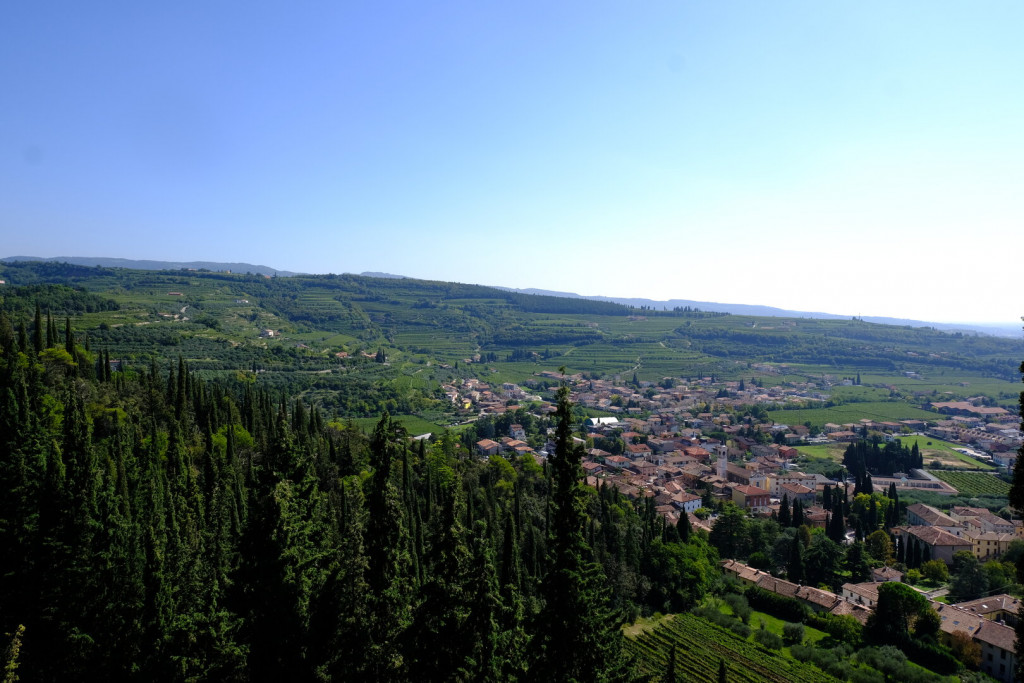
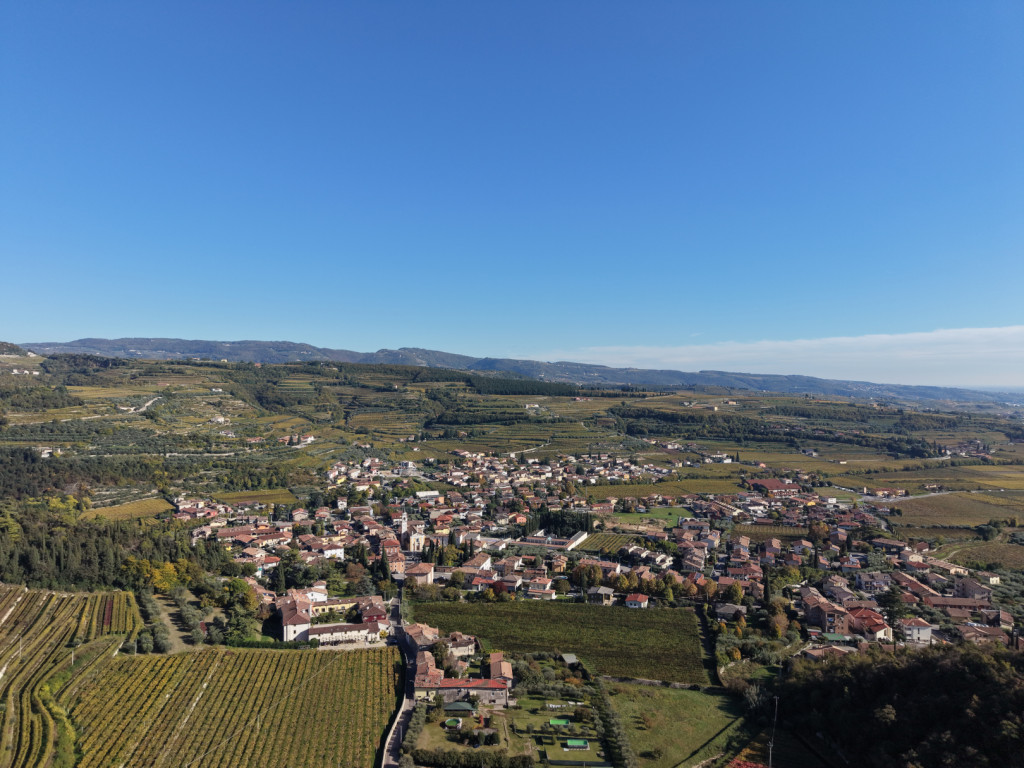
Fumane is one of the oldest historic centers in Valpolicella, with evidence of Arusnate settlements dating back to Roman times. On Colle della Fumana, behind Villa Della Torre, once stood a medieval castle, bearing witness to the strategic importance of the area.
Also dating back to the Middle Ages are the small churches of San Micheletto (then part of the territory of Bure) and Santa Maria in the Vaio district, which was connected to the Monastery of San Zeno. In the 17th century, the monastery had the interior decorated with frescoes depicting Marian scenes.
On nearby Monte Incisa, among the cypress trees, stands the Sanctuary of La Salette, built in the mid-19th century by a Capuchin friar inspired by the sanctuary of the same name in France, near Grenoble.
Fumane developed as a cluster of historic hamlets (contrade), some of which are now partly connected due to more recent urban expansion. In the valley bottom, you’ll find contrade like Vaio, Casterna, Bertarole, Isola, and Volpare; to the west lie Volta, Banchette, and Ca’ Melciori.
The modern town center, with the municipal building and parish church, developed more recently. The parish church, rebuilt in the 18th century, preserves numerous works of art.